Peptide for Paws begins at the paw pad
Wound tissue, a dog’s walk, a cat’s blood sugar: I want the animal’s ordinary life to stay in sight when a measurement looks promising.
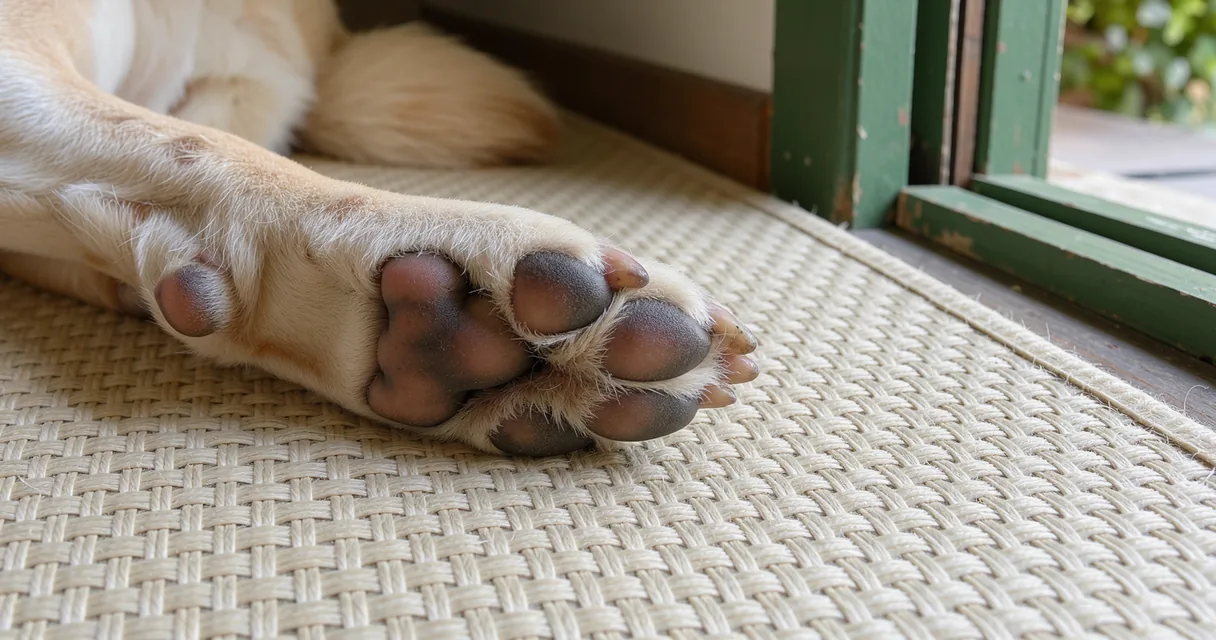
The dog-pad experiment
In 1996, researchers studied experimentally created paw-pad wounds in 12 healthy English Pointers. Wounds treated with a tripeptide-copper complex developed more type-I collagen than saline-treated wounds. That is a wonderfully literal place for a site called Peptide for Paws to begin: the tissue beneath the foot.
The tissue result is intriguing. I’m less forgiving of the easy next step. The available abstract never identifies the tripeptide’s sequence. Calling it a GHK-Cu experiment would settle a question the source leaves open. These were laboratory wounds in healthy dogs; a pet with an injured paw brings a different question.
The published account of the paw-pad study leaves a small, concrete finding worth examining. It leaves the larger hope of comfortable movement waiting for evidence of its own. Open the paw-pad case.
Walking with arthritis
The most persuasive change of scene is from laboratory pads to dogs already living with arthritis. A double-blind, placebo-controlled study in 31 dogs with naturally occurring osteoarthritis reported improvements in several walking measurements and in an assessed quality-of-life measure with a specific oral collagen peptide supplement. The study was funded by the collagen maker, which employed an author.
I credit this trial with asking about movement in affected dogs. I’ll be more convinced if another group replicates it. Its finding concerns the oral collagen preparation studied; it supplies no result for injectable BPC-157 or TB-500. The word “peptide” is doing far too much work when those get bundled together. Read about the walking trial.
Cats and the food bowl
The feline diabetes papers bring a different puzzle. In a placebo-controlled study of 22 cats already in diabetic remission, exenatide contributed to maintaining glucose control, yet remission duration did not differ between the groups. The glucose finding interests me; the unchanged remission duration disappoints me.
An appetite change also deserves its own sentence. Eating less and vomiting were reported in a small exenatide trial in diabetic pet cats. A lighter food bowl is a poor stand-in for the whole animal. Follow the cat diabetes results.
The veterinary conversation
The route to any medicine for a pet is a veterinarian. The FDA’s animal-drug guidance and extra-label rules describe decisions made within veterinary care, with conditions attached to the use of approved medicines outside their labels.
I’d bring a precise question: what change in this particular animal would count as success? Better walking, a blood-sugar result and wound-tissue collagen can all matter, but they answer different questions. Prepare the medicine questions, or browse the reading list.