Collagen peptides and a dog’s walk
This trial asks about dogs already living with arthritis. That makes it especially relevant to the sort of benefit I care about.
Dogs with naturally occurring arthritis
The 2024 oral collagen study was a systematic, placebo-controlled, double-blind intervention in 31 dogs with naturally occurring osteoarthritis. The oral bioactive collagen peptides were compared with omega-3 fatty acids and vitamin E. The report attributes significant improvement in several kinetic parameters—measurements of movement—and the assessed quality-of-life measure to the collagen supplementation.
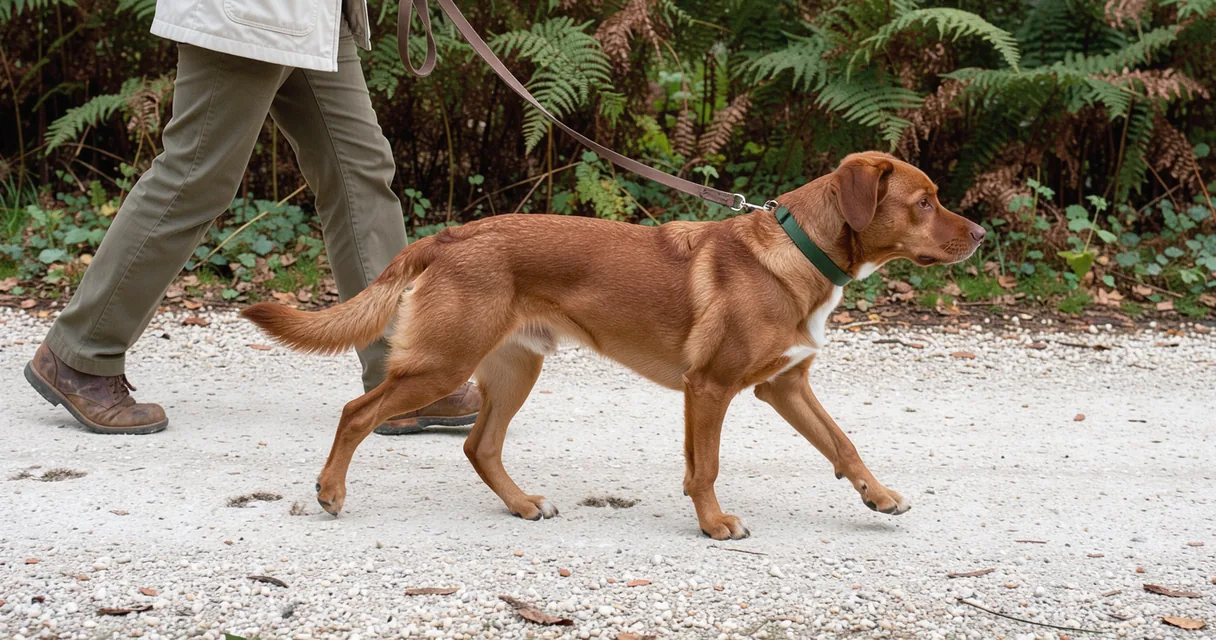
An elaborate mechanism can wait. Movement in an arthritic dog is the outcome I’m impatient to see. A dog’s movement is close to the reason anyone asks about joint research in the first place. The enrolled dogs had the condition under discussion, which also makes this a different proposition from an injury created for an experiment.
Funding and replication
The collagen trial was funded by the maker of the collagen preparation, and an author was employed by that maker. Those facts temper my confidence. I want a result like this repeated by a separate group before treating it as dependable across settings.
That is a request for a stronger record, rather than a reason to erase the positive finding. The study has the virtues its design gives it and the limitations its size, funding and particular preparation leave it with. “Encouraging” seems a fair adjective; a sweeping endorsement would outrun the evidence.
The finding also attaches to the preparation tested. A general shelf of collagen supplements is a much bigger subject than this experiment.
The injectable comparison
The oral collagen result supplies evidence about that oral supplement. BPC-157 arrives with a different record: the dog safety work and blood-level work in beagles concerned healthy laboratory animals, not treatment of pet dogs with arthritis. Grouping everything called a peptide makes the subjects appear closer than these experiments allow. It is still too loose a connection to move the walking result from one substance to another.
The dog-pad copper experiment is different again: a tissue outcome in experimentally created wounds. That case is worth reading alongside this one precisely because their subjects and measurements differ.
For a pet’s medicine, the next conversation is with its veterinarian. A useful starting question is whether a proposed benefit means more comfortable walking, a changed measurement or something else entirely.